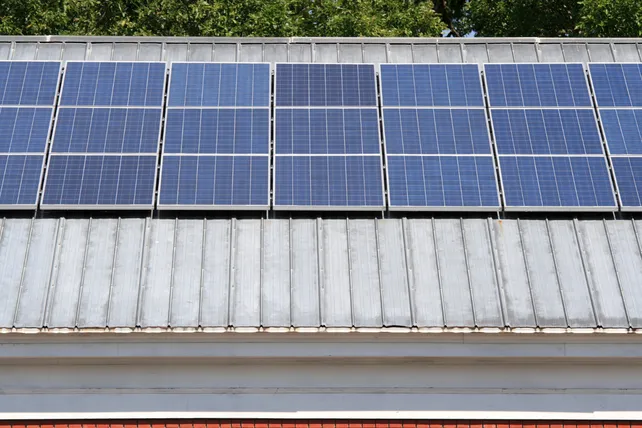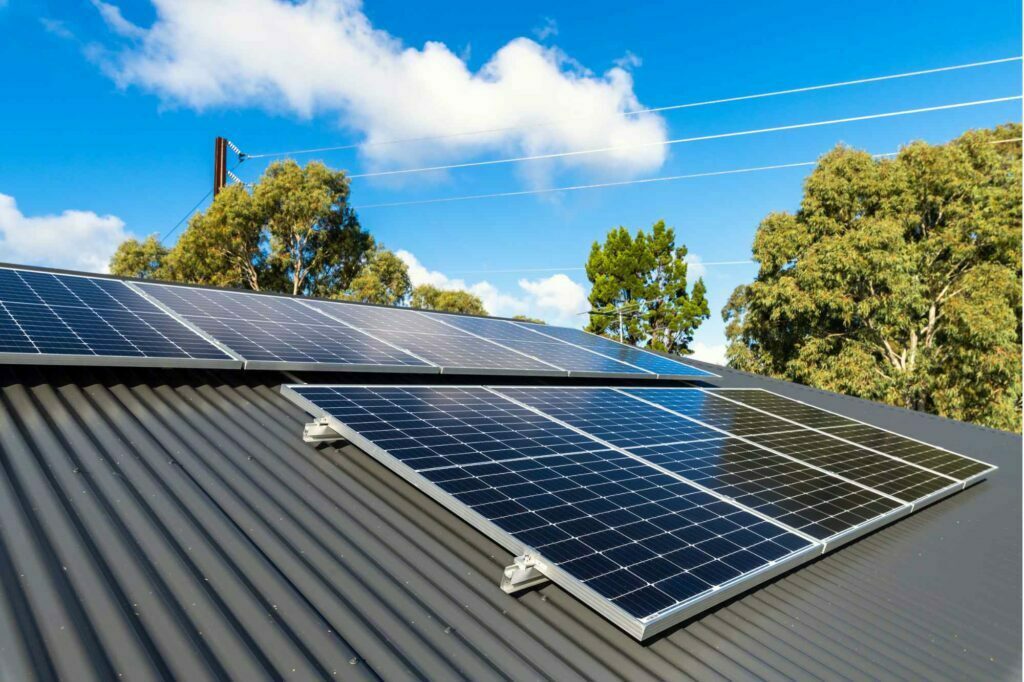
Commercial solar panels with battery storage
Adding battery storage to a commercial solar system allows you to store excess daytime generation for use during evenings, overnight or during peak tariff periods. This increases self-consumption from a typical 60–70% to 80–95%, significantly improving financial returns.
How batteries improve commercial solar ROI
Without batteries, excess solar generation is exported at 5–15p/kWh depending on your supplier. With batteries, that same electricity is stored and used later, displacing grid electricity at 24–34p/kWh. The value difference — 25–35p per kWh stored — makes batteries financially attractive for many businesses.
Batteries are especially valuable for businesses on time-of-use tariffs, where peak rates (4pm–7pm) can be 50–80p/kWh. Storing cheap solar electricity and discharging during peak periods (peak shaving) can cut electricity costs dramatically.
Battery sizing
Battery capacity is measured in kWh. A typical approach is to size the battery to cover 2–4 hours of evening or peak consumption:
- Small office (50 kWp solar): 30–50 kWh battery
- Medium warehouse (100 kWp solar): 50–100 kWh battery
- Large industrial (250 kWp solar): 100–250 kWh battery
Larger batteries cost more upfront but can provide additional revenue through grid services such as frequency response and demand flexibility.
Battery types and lifespan
Most commercial battery systems use lithium iron phosphate (LFP) cells, which offer 6,000–10,000 charge cycles and a warranted lifespan of 10–15 years. This comfortably covers the payback period and provides years of additional savings.
Grid services and revenue stacking
Commercial batteries can earn additional income by participating in grid balancing services. National Grid ESO pays businesses to increase or decrease consumption at short notice. Revenue from these services can range from £50–£150 per kWh of battery capacity per year, significantly improving battery ROI.
Get solar + battery quotes
nu.energy connects you with installers who specialise in combined solar and battery systems. Free, no-obligation quotes within 24 hours.