Why UK businesses are switching to commercial solar
Commercial electricity prices in the UK rose dramatically since 2020, more than doubling at peak during the energy crisis. For businesses consuming 50,000 kWh per year or more, this translates to annual bills that have climbed from around £5,000 to over £12,000 in many cases. Commercial solar panels offer a route to locking in a lower, predictable cost of energy for 25 years or more.
A well-specified commercial solar system generates electricity at a levelised cost of around 4–7p per kWh, compared with grid electricity at 24–34p/kWh. For businesses with high daytime consumption — manufacturing, warehousing, retail, hospitality — the savings can be substantial from day one.
How commercial solar works for businesses
Solar panels convert sunlight into DC electricity. An inverter converts this to AC electricity that your building uses directly. Any excess is either stored in batteries (if fitted) or exported to the grid under the Smart Export Guarantee (SEG), earning you typically 5–15p/kWh depending on your supplier.
The key metric is self-consumption rate: the percentage of solar generation your business uses directly. Higher self-consumption means higher savings. Businesses operating during daylight hours — Monday to Friday, 8am to 6pm — typically achieve 60–80% self-consumption without batteries.
System sizes and what to expect
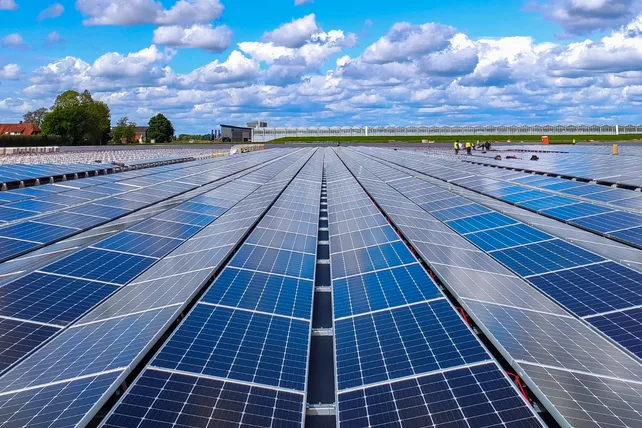
Commercial solar systems are measured in kilowatt-peak (kWp). A typical small business might install 30–50 kWp. A medium-sized warehouse or factory might install 100–250 kWp. Large logistics sites and industrial buildings can accommodate 500 kWp or more.
As a rough guide, each kWp of solar capacity requires approximately 6–8m² of roof space and generates around 900–1,100 kWh per year in the UK, depending on orientation, tilt and location.
Financial incentives and grants
Several UK funding schemes can reduce the upfront cost of commercial solar:
- Annual Investment Allowance (AIA): Deduct the full cost of solar from taxable profits in the year of installation, up to £1 million.
- REAP grants: Rural businesses can access grants covering up to 25% of project costs.
- Salix Finance: Interest-free loans for public sector organisations including schools, NHS and local authorities.
- UKSPF: Some local authorities allocate UK Shared Prosperity Fund money to business energy efficiency projects.
Why use nu.energy?
Finding the right installer matters. MCS accreditation is essential for accessing SEG payments and most grant schemes. nu.energy connects you with up to three MCS-accredited installers who compete for your project. The service is free, there is no obligation, and you get competitive quotes within 24 hours.