What to expect from commercial solar installation
Installing commercial solar panels is a structured process with clear milestones. From initial enquiry to system commissioning, most projects are completed within 8–16 weeks.
Stage 1: Site survey (Week 1–2)
Your installer visits the site to assess roof condition, structural capacity, electrical infrastructure and shading. They take measurements, photograph the site and review your electricity bills to understand your consumption profile. This survey is typically free and forms the basis of their detailed quote.
Stage 2: Design and quotation (Week 2–3)
The installer produces a system design specifying panel layout, inverter sizing, cable routes and mounting method. The quote includes projected annual generation, estimated savings, payback period and ROI. Most installers also advise on applicable grants and tax relief.
Stage 3: DNO application (Week 3–12)
Systems above 3.68 kWp (single phase) or 11 kWp (three phase) require a G99 application to your local Distribution Network Operator. Processing typically takes 4–8 weeks, though this can extend to 12 weeks in areas with constrained grid capacity. Your installer manages this process.
Stage 4: Installation (1–5 days)
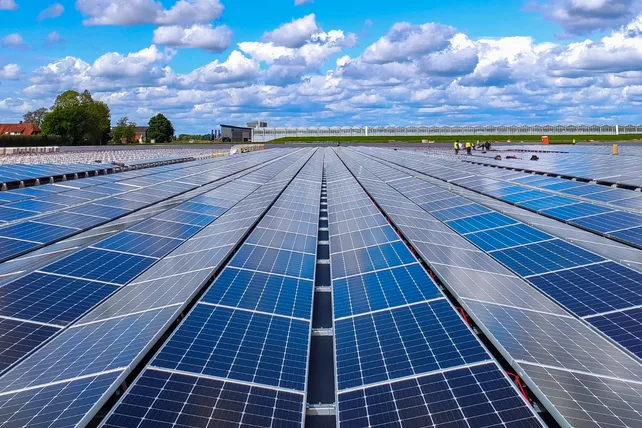
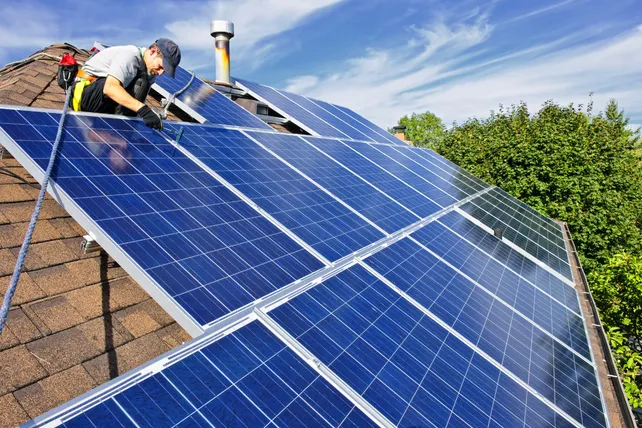
Physical installation is relatively quick. A 50 kWp flat roof system typically takes 2–3 days. A 200 kWp system might take 4–5 days. Scaffolding (if needed) is erected beforehand. Installation involves mounting rails or ballast trays, placing panels, running DC cabling to inverters, and connecting to your distribution board.
Stage 5: Commissioning and MCS certification
After installation, the system is tested, commissioned and registered with the Microgeneration Certification Scheme (MCS). MCS registration is essential for SEG eligibility and most grant schemes. Your installer provides a handover pack including performance data, warranty documents and monitoring system login.
Minimal disruption
Most commercial solar installations cause little disruption to daily operations. Work takes place on the roof and in plant rooms. Brief power outages (typically under an hour) may be needed for final grid connection.