CDM Regulations for Commercial Solar Projects
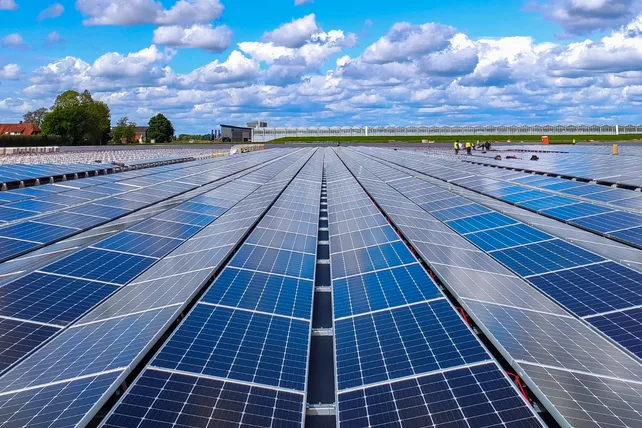
The Construction (Design and Management) Regulations 2015 (CDM 2015) apply to most commercial solar installations in the UK. These regulations establish the legal framework for managing health and safety throughout the entire project lifecycle, from initial design through to completion and handover.
CDM regulations typically apply to commercial solar projects where the construction work will last more than 30 days and involve more than 20 workers simultaneously, or exceed 500 person days of construction work. However, even smaller projects benefit from following CDM principles to ensure comprehensive safety management.
Under CDM 2015, every commercial solar project must have clearly defined duty holders, including a client, principal designer, principal contractor, and individual contractors. Each role carries specific legal responsibilities for identifying, managing, and mitigating health and safety risks throughout the installation process.
Pre-Installation Risk Assessment Requirements
A comprehensive risk assessment forms the foundation of any safe commercial solar installation. This assessment must be completed before work begins and should identify all potential hazards associated with the specific site and installation requirements.
The risk assessment should cover structural integrity of the roof or mounting surface, electrical hazards, access and egress routes, weather-related risks, and potential impacts on building occupants during installation. Qualified installers must also assess the condition of existing electrical systems and identify any asbestos or other hazardous materials that could be disturbed during the installation process.
Site-specific factors such as proximity to other buildings, overhead power lines, or sensitive equipment must be evaluated. The assessment should result in a detailed method statement outlining how identified risks will be controlled or eliminated during the installation work.
Working at Height Safety Standards
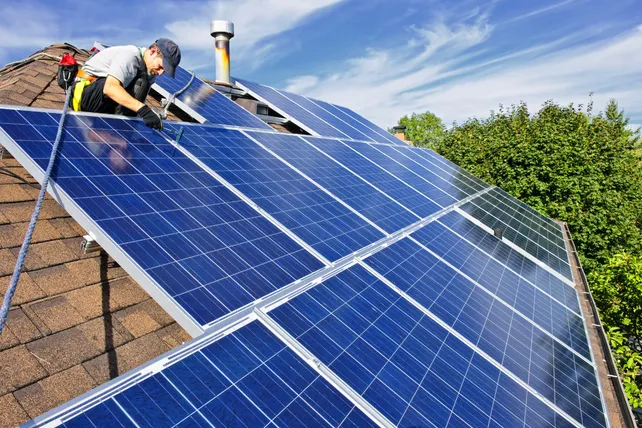
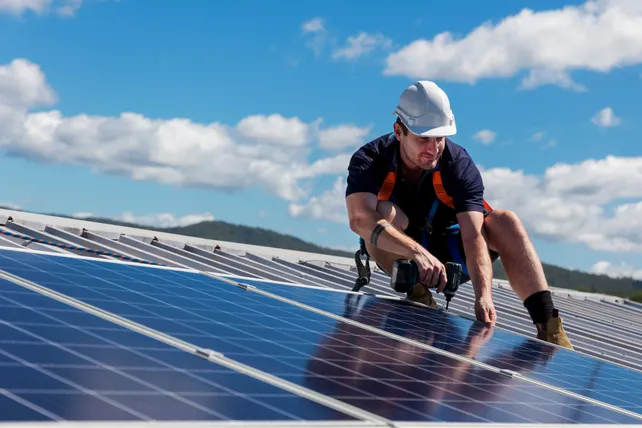
Commercial solar installations almost invariably involve working at height, making compliance with the Work at Height Regulations 2005 essential. These regulations require that work at height is properly planned, appropriately supervised, and carried out by competent persons using suitable equipment.
The hierarchy of control measures must be followed: avoid work at height where possible, prevent falls using guardrails or working platforms, and finally mitigate the consequences of falls through personal protective equipment such as harnesses and safety lines. All access equipment, including scaffolding, mobile elevated work platforms, and ladder systems, must be inspected before use and comply with relevant British Standards.
Weather conditions play a crucial role in working at height safety. Installation work should not proceed in high winds, rain, or icy conditions that could compromise worker safety or equipment stability. Clear protocols must be established for suspending work when conditions become unsafe.
Fall Protection Systems
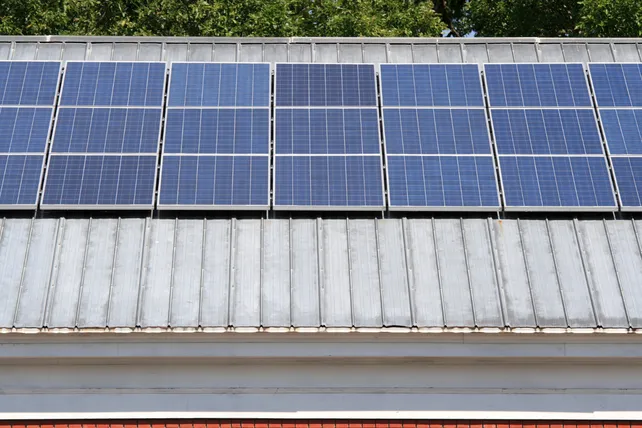
Permanent fall protection systems may be required for ongoing maintenance access to commercial solar installations. These systems must be designed and installed to British Standard BS 8610, which covers the selection and installation of personal fall protection equipment for maintenance and inspection of commercial roof-mounted photovoltaic systems.
Electrical Safety and Isolation Procedures
Electrical safety requirements for commercial solar installations are governed by the Electricity at Work Regulations 1989 and relevant British Standards, particularly BS 7909 for temporary electrical installations and BS EN 62305 for lightning protection systems.
Before any electrical work begins, existing electrical systems must be properly isolated and locked off using appropriate isolation procedures. This includes both AC and DC isolation points, as solar panels generate electricity whenever exposed to light, creating a continuous electrical hazard.
All electrical installation work must be carried out by competent persons who understand both conventional electrical systems and the specific requirements of photovoltaic installations. This includes proper earthing and bonding arrangements, appropriate cable management to prevent damage, and installation of surge protection devices where required.
DC System Safety
Direct current systems in commercial solar installations present unique safety challenges. Unlike AC systems, DC circuits cannot be easily interrupted by conventional circuit breakers, and DC arcs can be more persistent and dangerous. Proper DC isolation equipment must be installed at both string and system levels, with clear labelling and emergency shutdown procedures.
Principal Designer and Contractor Duties
Under CDM 2015, the principal designer has overall responsibility for coordinating health and safety aspects of the design phase. For commercial solar projects, this includes ensuring that the system design minimises risks during installation, maintenance, and eventual decommissioning.
Principal designer duties include identifying and eliminating foreseeable risks in the design, providing relevant information to other duty holders, and preparing a health and safety file that will be handed to the client upon completion. The design must consider safe access for maintenance, appropriate structural loading, and emergency procedures.
The principal contractor coordinates health and safety during the construction phase, ensuring that all contractors and workers are competent, properly inducted, and following agreed safety procedures. They must also ensure that welfare facilities are provided and that there are suitable arrangements for emergency response.
Competency Requirements
All personnel involved in commercial solar installations must be competent for their specific roles. This typically means holding relevant qualifications, having appropriate experience, and receiving project-specific training on the particular installation requirements and safety procedures.
Post-Installation Safety Documentation
Comprehensive documentation is essential for ongoing safety management of commercial solar installations. The health and safety file required under CDM regulations must contain all information necessary for future maintenance, modification, or decommissioning work to be carried out safely.
This documentation should include electrical installation certificates, structural calculations and load assessments, operating and maintenance instructions, emergency procedures, and details of any residual risks that could not be eliminated during the design and installation process. The information must be kept up to date throughout the life of the installation.
Regular inspection and maintenance schedules should be established based on manufacturer recommendations and site-specific conditions. This includes electrical testing, structural inspections, and verification of safety systems such as fall protection equipment and emergency isolation devices.
Compliance Certification
For systems up to 50kW seeking to access the Smart Export Guarantee, MCS certification provides assurance that installation and documentation standards have been met. Larger commercial installations should follow equivalent standards and obtain appropriate electrical certification to demonstrate compliance with safety requirements.
All commercial solar installations require appropriate certification under Part P of the Building Regulations, demonstrating that electrical installation work has been carried out safely and to the required standards. This certification becomes part of the permanent safety documentation for the installation.
See also: Our commercial solar cost overview pulls together pricing tables, tax relief, grants, sector breakdowns and FAQs in one place.