Maximising the energy output from commercial solar installations requires careful consideration of panel orientation and positioning. For UK businesses, understanding how to optimise solar panel angles and orientations can significantly impact both energy generation and return on investment.
Optimal Solar Panel Angles for UK Climate
The UK's latitude, ranging from approximately 50° to 60° north, creates specific considerations for solar panel positioning. The optimal tilt angle for fixed solar panels in the UK is generally between 30° and 40°, with 35° often cited as the ideal compromise for year-round performance.
This angle maximises solar irradiance capture throughout the year, accounting for the sun's seasonal path across the sky. During summer months, the sun reaches higher angles, while winter sees much lower solar elevation. A 35° tilt provides an effective balance, capturing strong summer generation whilst maintaining reasonable winter performance.
For commercial installations where roof space allows flexibility, slight adjustments to this angle can optimise performance for specific business needs. Energy-intensive operations during summer months might benefit from angles closer to 30°, whilst businesses with consistent year-round demand might prefer steeper angles around 40°.
East-West vs South-Facing Orientations
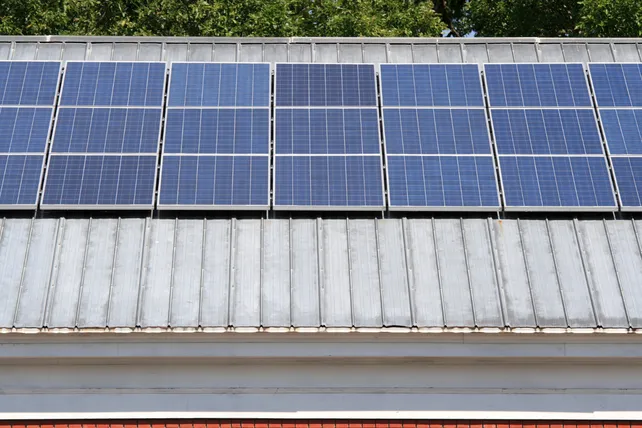
South-facing orientation remains the gold standard for UK solar installations, providing maximum annual energy yield. However, commercial properties don't always offer ideal south-facing roof space, making alternative orientations worth considering.
East-west orientations can offer compelling advantages for commercial users. Whilst total annual generation may be 10-15% lower than optimal south-facing arrays, east-west systems provide more consistent daily energy profiles. Morning generation from east-facing panels often aligns well with business operations starting up, whilst west-facing panels continue generating during afternoon peak demand periods.
For businesses with high daytime electricity consumption, this extended generation period can improve self-consumption rates, potentially offsetting the reduced total generation through better alignment with usage patterns. East-west systems also experience less pronounced midday generation spikes, which can be beneficial for grid management and may become increasingly valuable as time-of-use tariffs develop.
North-facing installations generally aren't recommended for UK commercial solar projects, as they typically produce 40-50% less energy than south-facing equivalents, making payback periods significantly longer.
Impact of Building Orientation on Output
Commercial buildings rarely offer perfect solar orientation, requiring pragmatic approaches to panel positioning. Understanding how building orientation affects output helps inform realistic expectations and system design decisions.
Southeast and southwest orientations typically achieve 90-95% of optimal south-facing performance, making them highly viable for commercial installations. Even due east or west orientations can achieve 80-85% of optimal output, which may still provide attractive returns depending on electricity prices and consumption patterns.
Multi-aspect installations, utilising different roof sections with varying orientations, can optimise overall system performance. By combining south-facing sections with east or west-facing areas, businesses can maximise their roof space utilisation whilst maintaining strong overall generation profiles.
Building geometry also influences panel performance through shading considerations. Parapet walls, plant equipment, and neighbouring structures can create shading patterns that vary seasonally. Professional shading analysis helps identify these impacts and inform panel layout decisions to minimise losses.
Seasonal Performance Variations
UK solar installations experience significant seasonal variation, with summer months typically generating 4-5 times more energy than winter months. Understanding these patterns helps businesses plan energy strategies and manage expectations.
June and July typically provide peak generation, with long daylight hours and high solar angles maximising panel output. December and January represent the lowest generation period, though modern panels still produce meaningful energy even during short winter days.
Seasonal variations also affect optimal orientation benefits. South-facing panels show the most pronounced seasonal variation, with very high summer peaks and low winter output. East-west orientations tend to flatten this seasonal curve somewhat, providing more consistent ratios between summer and winter generation.
For businesses with seasonal operations or varying energy demands throughout the year, these patterns inform system sizing decisions. Operations with peak energy needs during summer months can often justify larger installations, as generation aligns well with demand. Conversely, businesses with consistent year-round energy needs might focus on system sizes optimised for winter performance.
Roof Space Maximisation Strategies
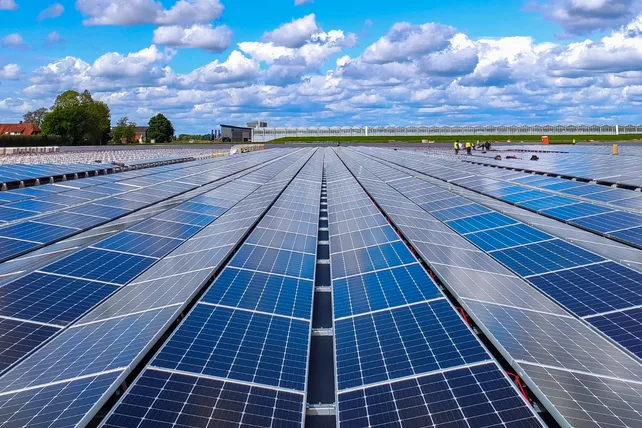
Commercial roof space represents valuable real estate for solar installations, making efficient utilisation crucial for maximising returns. Several strategies help optimise panel density whilst maintaining performance.
Row spacing calculations must balance panel density with shading avoidance. Closer row spacing increases the number of panels but can create inter-row shading, particularly during winter months when the sun is lower. Optimal spacing typically ranges from 2.5 to 4 times the panel height, depending on specific site conditions and performance priorities.
Landscape versus portrait panel orientations affect roof utilisation efficiency. Portrait orientations often allow better space utilisation around roof obstacles and boundaries, whilst landscape orientations may simplify mounting and electrical design. The optimal choice depends on specific roof geometry and constraints.
Ballasted mounting systems, common on flat commercial roofs, require additional spacing to meet structural loading requirements and wind uplift standards. These considerations may influence panel spacing beyond purely solar performance factors.
Innovative mounting solutions, such as east-west mounting systems, can significantly increase panel density on suitable roofs. These systems mount panels at shallow angles facing opposite directions, reducing spacing requirements whilst providing the generation profile benefits of east-west orientation.
Monitoring and Adjusting Panel Performance
Ongoing monitoring ensures commercial solar installations maintain optimal performance throughout their operational life. Modern monitoring systems provide detailed insights into generation patterns, helping identify performance issues and optimisation opportunities.
String-level monitoring can identify underperforming panel groups, often indicating shading issues, soiling, or equipment faults. Panel-level monitoring provides even greater granularity but at higher cost, typically justified for larger installations or complex roof layouts.
Performance monitoring helps validate initial orientation and design decisions against actual generation data. Seasonal performance patterns reveal whether systems are performing as expected and can inform maintenance scheduling and future expansion decisions.
Regular cleaning and maintenance schedules help maintain optimal performance from existing installations. UK weather conditions can create soiling from dust, bird droppings, and organic matter that reduces panel efficiency. Professional cleaning typically improves generation by 2-5%, with benefits varying by location and environmental conditions.
Advanced monitoring platforms increasingly offer predictive analytics, helping identify potential issues before they impact generation. These systems can optimise maintenance scheduling and help plan for component replacements or system expansions.
Professional Assessment and Installation
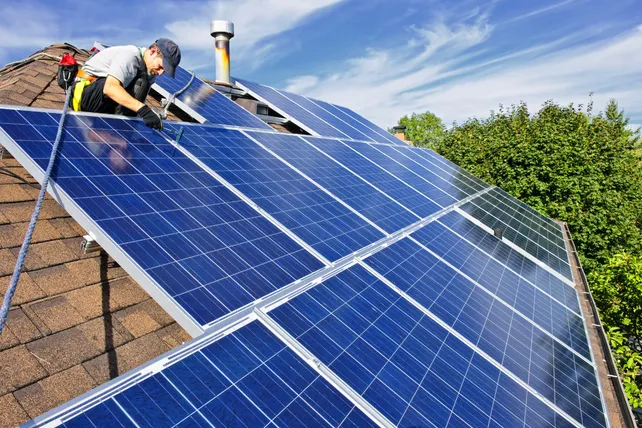
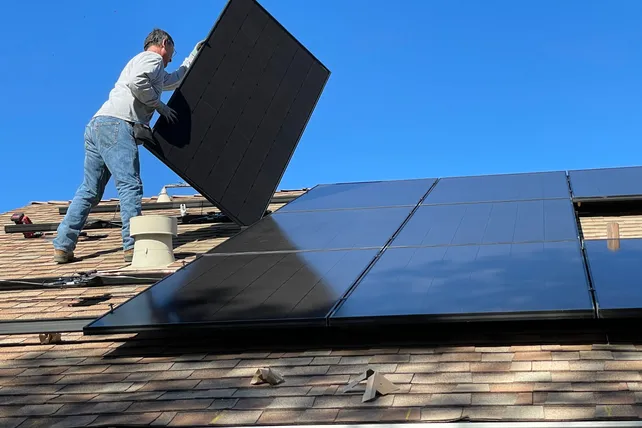
Optimising commercial solar panel orientation requires professional expertise to balance multiple technical and commercial factors. Qualified commercial solar installers conduct detailed site assessments, considering roof conditions, shading patterns, electrical infrastructure, and business energy requirements.
Professional shading analysis using industry-standard software helps quantify the impact of different orientation choices, enabling informed decisions based on actual performance projections rather than theoretical optimums.
For businesses ready to explore commercial solar opportunities, connecting with experienced installers ensures projects benefit from current best practices and regulatory compliance. Professional assessment helps identify the optimal balance between panel orientation, roof utilisation, and commercial returns for each specific site.